What you know fades.
Unless you revisit it.
Both curves come straight from the app’s formulas. Same start: one successful recall. The first student never comes back to it. The second comes back four times, spacing them out a little more each time.
What it builds on
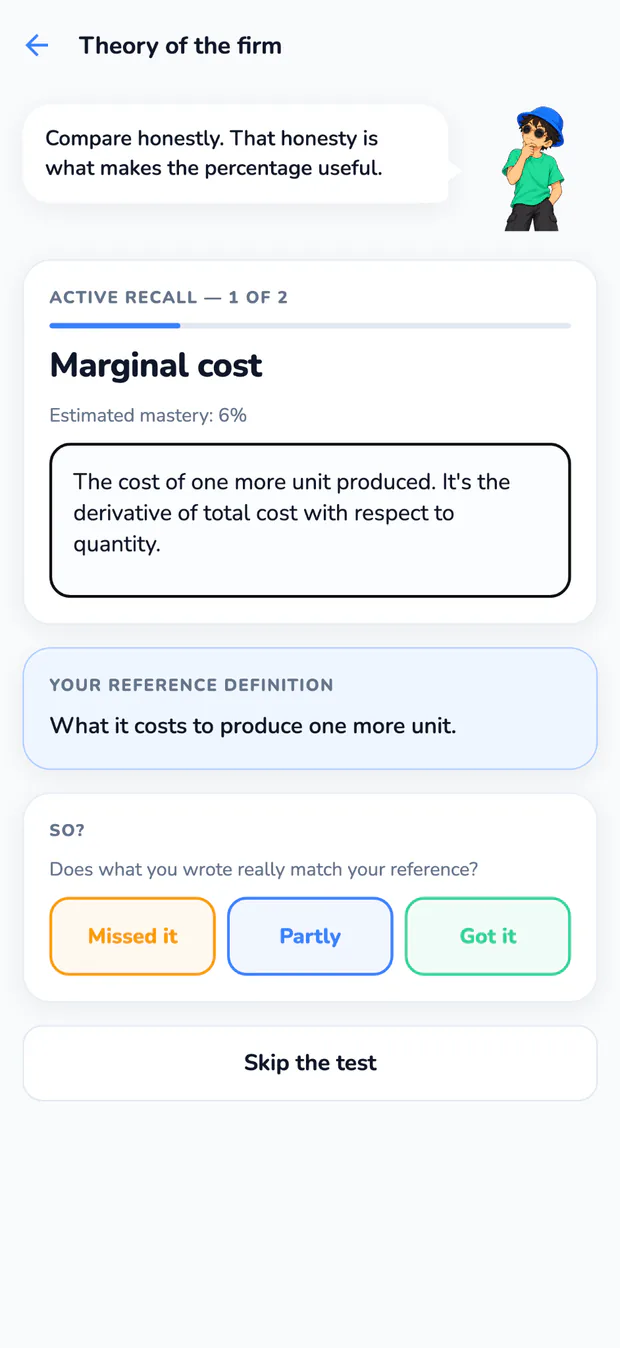
Retrieve the answer
A meta-analysis brings together 222 studies and 48,478 school and university students on retrieval tests in the classroom. In two experiments using texts, testing improved retention after a delay, even when rereading gave students more confidence.
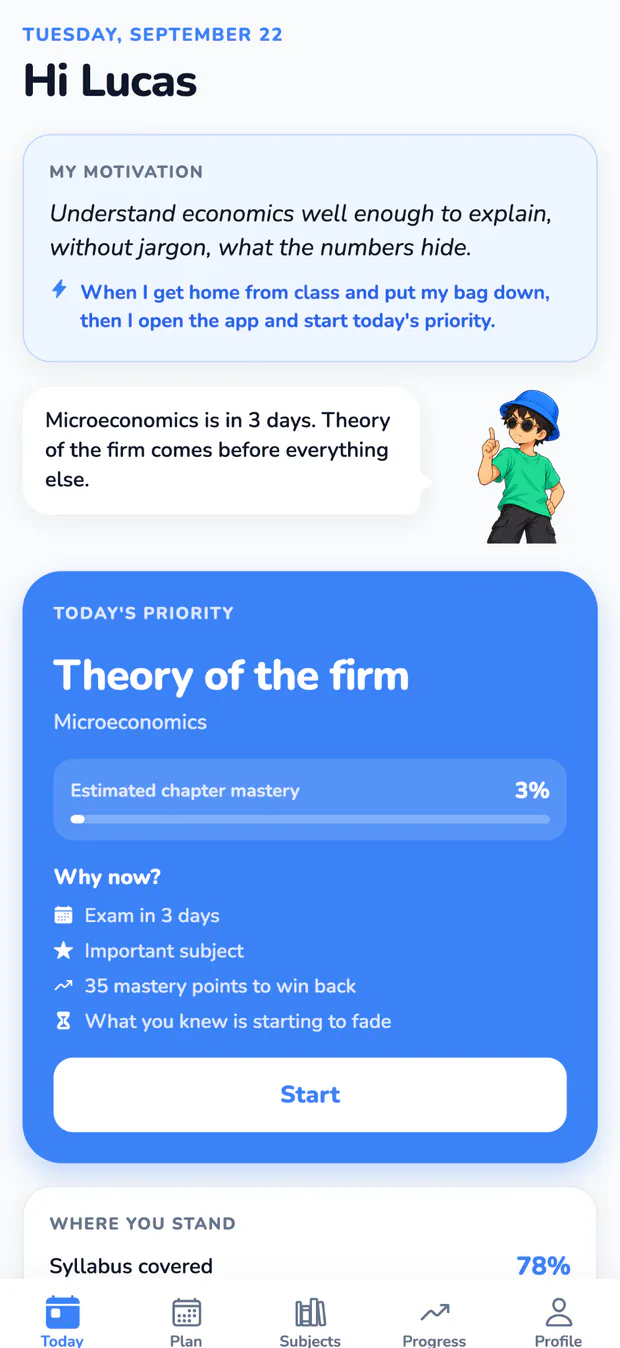
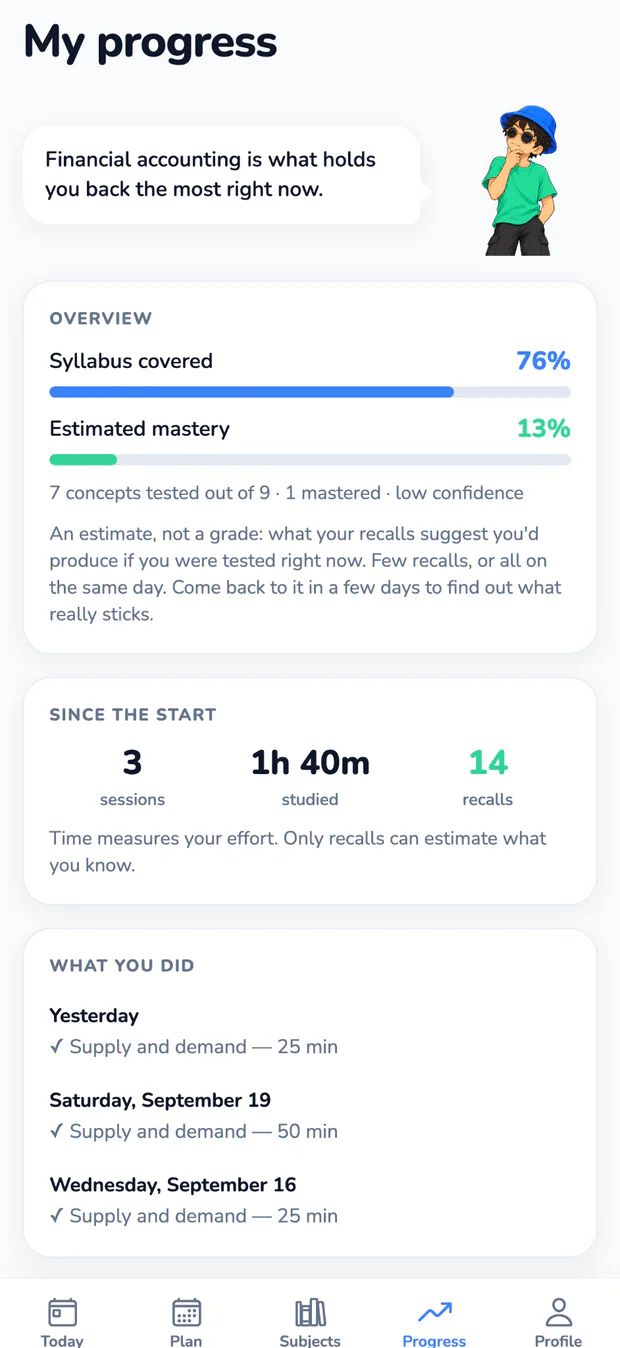
In Rityvo, the Active Recall is the only moment your estimated mastery moves.
Yang et al., 2021 ↗ · Roediger & Karpicke, 2006 ↗Come back, spaced out
A review of 317 experiments, drawn from 184 articles, shows that spacing and the delay before the exam need to be considered together. There is no universal schedule that suits every course.
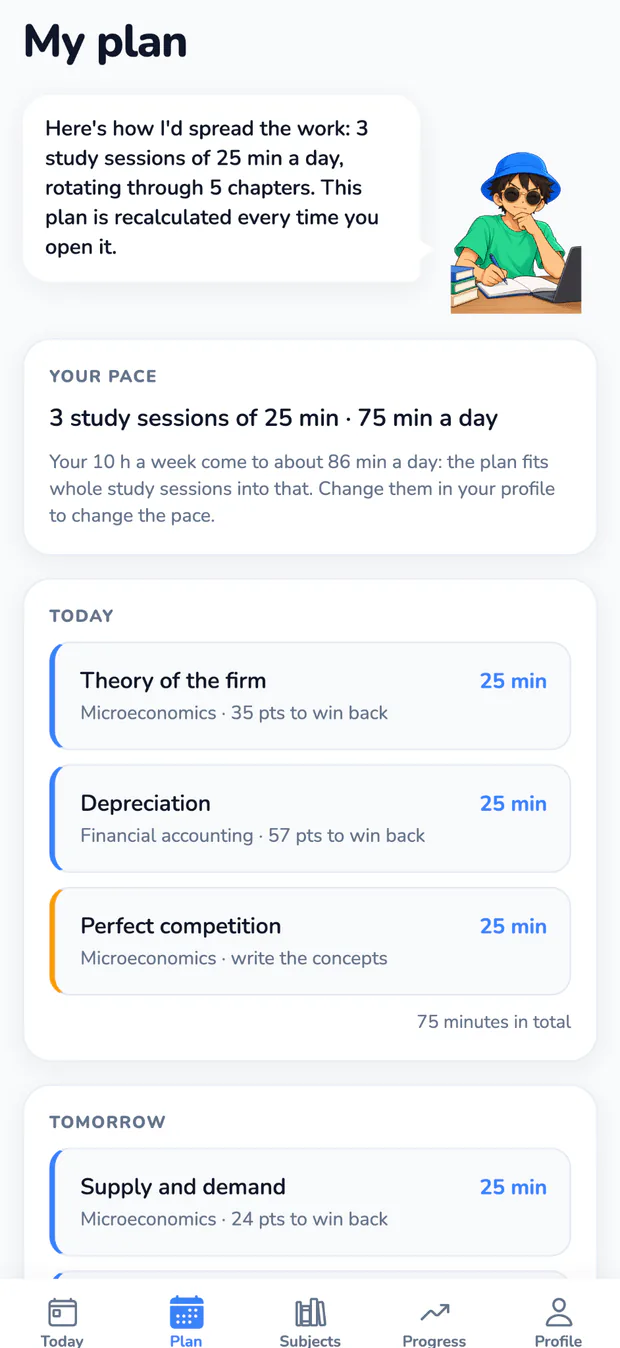
In Rityvo, your plan never brings the same chapter back two days in a row. The algorithm itself is not validated by this study.
Cepeda et al., 2006 ↗Decide the moment in advance
A meta-analysis of 94 tests examines “if-then” plans: deciding when, where and how to act. The effect depends on the context; it is not an automatic formula for passing exams.
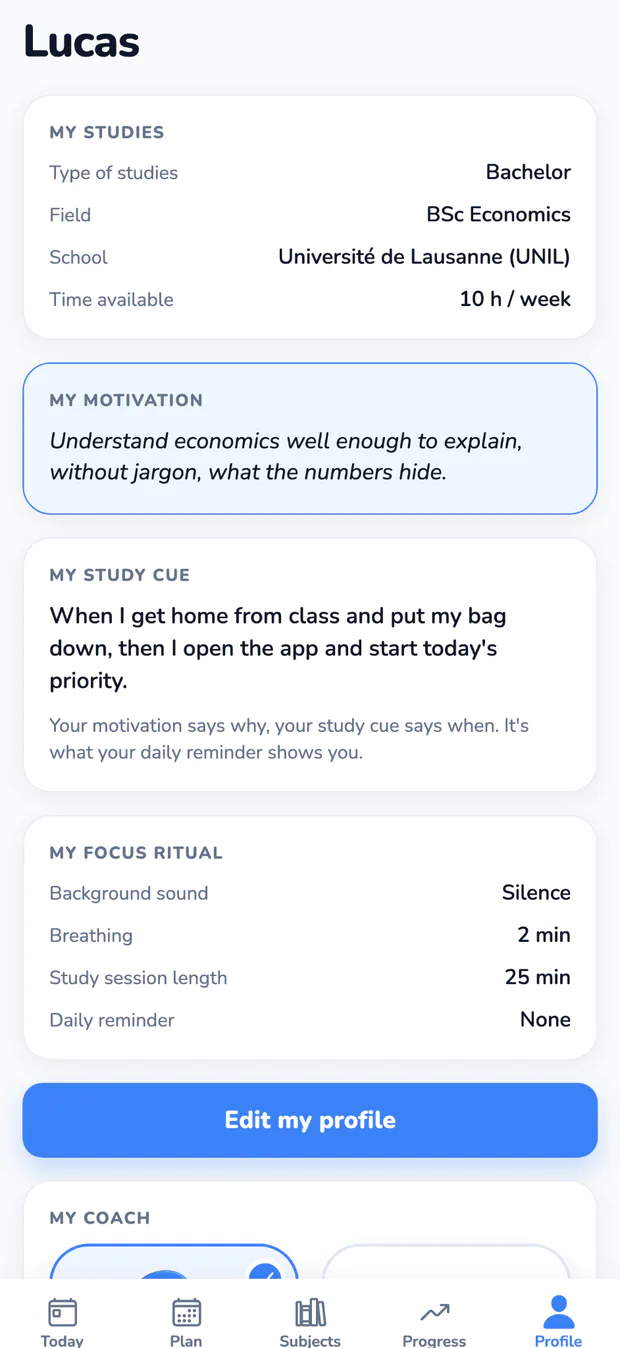
In Rityvo, “My study cue” gives your next study session a concrete starting point.
Gollwitzer & Sheeran, 2006 ↗These studies cover different populations, tasks and contexts. They do not guarantee higher grades or a particular retention rate for an individual.